



BY KABOWEI AKAMANDE
Background
On Thursday 27th August 2026, the Ijaw nation gathered in Ijaw House at Ijaw Political Capital of Yenagoa, Bayelsa State. The gathering was recorded as “Conference of Sustaining the Vision and Izon Development Agenda of High Chief Government Oweizide Ekpemupolo (Tompolo) for Future Generations, Organised by Save the Niger Delta Group.”
Below is excerpt of my paper, titled, “Loyal Populace is the Best Security: 2022-2026 Scorecard of Tantita Security Services Nigeria Limited, TSSNL;” presented at the conference as Guest Speaker:
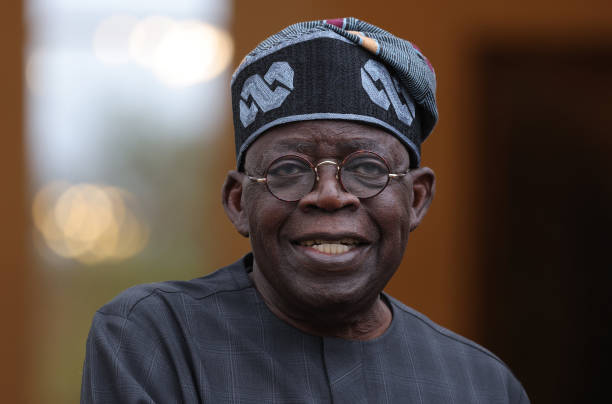
PHOTO: President Ahmed Bola Tinubu.
Protocol
Let me start by respectfully recognizing the presence of our revered royal fathers, all the executive members of Ijaw National Congress and Ijaw Youth Council, global and/or chapters present and distinguished ladies and gentlemen. In the interest of time, please permit me to stand on the protocols established by the last two speakers; Chief Dr. James Ekerare Neminebor, former President of Association of National Accountants of Nigeria, ANAN and Hon. Kingsley Kemebradiagha Kuku, PhD, eminent chairman of this event.
Having taken this leave, however, as a good citizen of Southern Ijaw, Constituency 1, It would be remiss of me, if I do not acknowledge the presence of an illustrious son of Southern Ijaw, Constituency 1 who is a candidate for the office of Bayelsa State House of Assembly. Some might argue, and rightfully so, that he is the leading candidate for that office. He is a professor in one of our state’s premier universities, the Federal University at Otuoke. Ladies and gentlemen, Dr. Tokpo Coronation.
In view of the theme of this event, it is appropriate that I also acknowledge the presence of one of the daughters of our legendary and quintessential hero, the one and only, late Major Isaac Jasper Adaka Boro, Deborah Boro Waritimi.
I believe this is where I say, “all protocols duly observed.”
Introduction
I feel honored to be invited as a guest speaker to this Tripartite Book Launch with the task to provide a review of Tantita Security Nig. Ltd’s scorecard. I congratulate the organizers of this event themed: Sustaining the Vision and Izon Development Agenda of High Chief Government Oweizide Ekpemupolo for Future Generation.
It felt nostalgic when I was asked to review the scorecard on Tantita Security Services. The request took me back to my previous life as a quality control chemist in the pharmaceutical industry, where one of my key responsibilities was data review. As a reviewer, I scrutinized every piece of data generated by chemists who tested finished product attributes – purity, potency, dissolution and efficacy – before any product could be released to the market. My signature on the data signified one thing: the product was safe for human use.
So, when Save the Niger Delta Group approached me to review Tantita’s performance, it was an easy decision to accept. Allow me, therefore, to share the outcome of my review. For clarity, I implore my audience to bear in mind the following: (1) The state of the Niger Delta before Tantita (2) Tantita’s impact while at the helm, and (3) The path forward.

PHOTO: High Chief Government Oweizide Ekpemupolo (Tompolo)
Tantita Security Services Nigeria Limited (TSSNL) is an indigenous security company contracted to protect oil and gas pipelines in the Niger Delta. Embedded within this mandate is an equally important responsibility: improving the living conditions of the host communities. Security cannot thrive in isolation. Accepting the duty to protect pipelines while ignoring the legitimate needs of the communities through which those pipelines run contradicts all known international best practices. When you take on the security of a region, you also assume responsibility for its burdens, its people, and its future.
The Save the Niger Delta Group is anxious to see the proper thing done. The watchword is “save.” The improvement of human conditions must go hand in hand with the protection of critical infrastructure. If we can agree on this, we now ask: how has Tantita saved the region and its inhabitants in the period 2022-2026. My job here is to basically look at the human conditions vis-à-vis infrastructural security and ascertain if this company is really saving the Niger Delta by stabilizing and opening it for business.
Patterns of History: From Chaos to Inclusive Community
History shows us that security isn’t just about firepower; it’s about the people. When Russia transitioned from communism to capitalism (1991–1999), Boris Yeltsin struggled to hold the nation together. Relying on nuclear stockpiles and military force, he oversaw a period of civil unrest, War of Dagestan and Chechen wars. To ordinary Russians, he represented a cruel old order, creating a “house divided” where his commands were met with defiance by a disgruntled public and a rising Mafia. Juxtapose the Russian debacle with another interregnum that took place in South Africa. Nelson (the Madiba) Mandela pulled his country from the precipice during that country’s transition from Apartheid to majority rule. In contrast, Nelson Mandela steered South Africa through its transition from Apartheid with a different philosophy: the “Madiba Magic.” He didn’t rely on force; he preached hope and inclusion.
If we carefully look at the big picture in each republic, we can see where Yeltsin got it wrong and Mandela right. Yeltsin relied so much on deadly force guaranteed by the military. The flip side being that Russians saw him as the unsympathetic face of a despotic establishment they wanted to see the last of. When he commanded Russians to go left, they turned right. With the menace of hard liners in parliament, disgruntled intelligence community and the Mafia, Russia was a house divided against itself.
But the great Madiba did things differently. He came out of prison preaching hope for the marginalized black majority and danced with them. No black leader was too small to see him. Mandela spoke Afrikaans to white South Africans called Afrikaners assuring them that “zwart gevaar,” or black danger, was a myth. To the apprehensive white farming community afraid of losing their lands, he told them that there would be no land expropriation in a democratic South Africa. Land redistribution, he agreed with them during the Conference for Democratic South Africa, CODESA, would be based on “Willing buyer, willing seller.” Everyone, especially the megalomaniac West, was overwhelmed by the Madiba Magic.
But realizing that poverty-stricken people would soon rebel under the pangs of hunger, Mandela did something that distinguished him as an exceptional genius. Immediately he was sworn in as South African first democratically elected president, he implemented two “pro-populi” plans that saved him and South Africa.
The first plan was called the Black Economic Empowerment, BEE. Under this scheme, beneficiaries who were mainly previously economically disadvantaged were trained, mentored and funded 100 per cent as owners of small and medium scale businesses. The second was the Reconstruction and Development Programme, RDP, Houses. Under this scheme, millions of low-cost houses were built each fiscal year and given free to black South Africans sidelined by successive Apartheid governments. Much like the Marshall Plan in post-WWII Germany, Mandela turned a hostile environment into a stable one by addressing “bread-and-butter” needs.
You can never have lasting security when the populace is hungry and angry. By building millions of low-budget houses for the homeless throughout the nine provinces of South Africa, and by using state funds to open businesses for the previously economic disadvantaged, the Madiba was able to accomplish higher security Yeltsin’s large army could not.
Scorecard: A Pro-Populi Model
As a good student of history, Tantita understands a friendly host community is the best security against pipeline vandalization and sabotage. Its pro-populi mantra is “A Hungry Community is a Security Risk.” From 2022, therefore, the indigenous security company fostered a unique partnership with the regional traditional rulers, women and youth leaders aimed at “changing mindset.” By involving host communities’ leaders as stakeholders in pipeline protection, the company performed commendably well as exemplified by the following milestones:
One, unlike previous security contractors that relied on heavy-handed military intervention, according to the Save the Niger Delta Group, Tantita utilizes a community-based security Model. This approach recognizes that the inhabitants of the Niger Delta are the most effective guardians of the infrastructure. Within the period in question, the company created over 200,000 jobs for local youths including ex-militants. And two, the company empowered some 80 local entrepreneurs through its N800 million business grant. Each beneficiary secured commendable business capital of N10 million.
Scorecard: Pipelines Security
One, in terms of energy security, Nigeria’s crude oil production rose from the 2022 output of 1.2 million barrels per day, mbpd, to 1.8 million in 2026. This was made possible because Tantita plugged the illegal tapping points for oil theft.
Two, as corollary to its core mandate of securing pipeline, Tantita supported Nigerian military in the region by renovating 35 army offices at the 3 Battalion, Effurun. It also built and commissioned for the Nigerian Security and Civil Defense Corps, NSCDC, the Nuhu Ribadu Hydrocarbon and Maritime Security Command and Control Centre.
Three, terrestrial and aquatic lives are improved following the elimination of the hazardous and illegal crude oil refineries that released thousands of tons of soot into the atmosphere.
Four, with better security under Tantita, onshore and shallow-water gas fields abandoned by their operators as a result of insecurity, were resuscitated leading to greater crude oil production for Nigeria.
Five, in pre-Tantita Nigeria oil theft was in excess of 700,000 barrels per day. Today, the figure has been reduced to 9,600 barrels and is still trending downward. In monetary terms, that is $43.2 million saved every day, if a barrel goes for $80. This means greater earning for the Nigerian National Petroleum Corporation, NNPCL. Some 1,700 illegal refinery sites in the region were dismantled and destroyed.
Six, Tantita operatives successfully decommissioned over 700 illegal pipeline connections for oil theft. Hundreds of intercepted vessels and barges used for illegal crude transportation were confiscated and handed over to the appropriate authoritative agencies.
Seven, the company modernized pipeline protection by upgrading from manual patrolling to electronic-based intelligence, surveillance and reconnaissance, ISR, that depend on drone technology. In 2026, Tantita entered into agreement with Textron Systems of America for military-grade drones capable of persistent monitoring capability. Such drones would be deployed in locations very difficult to access.
Eight, the Nigerian economy grew by 4.23% in 2025. The oil sector led the way at 20.46% thanks to improved security provided by the company. An improved Gross Domestic Product, GDP, means an increase in the monthly Federal Account Allocation Committee, FAAC, disbursement to the three-tier of government.
Conclusion: Respice, Adspice, Prospice
I conclude by inviting us to do two things: One, strategize on the next phase of our struggle in the Niger Delta for resource ownership and control given Tantita’s role in securing the pipeline infrastructures. Examine if this age-old struggle is alive and vibrant today? And two, we examine the future of the Ijaw struggle. In other words, by examining the present (Adspice) and possibly the past (Respice) and examining the future (Prospice); we can arrive at an unambiguous conclusion, right here today in this hall, if we’re getting it right.
If the management of Tantita has not already done so, which I doubt, the equity that defines the spirit of the historic Kaiama Declaration requires the company to spread today’s prosperity along ethnic lines. It is no longer golden to neglect the persistent calls from other regional minorities for a piece of the cake. Ignoring their demands will encourage every ethnic nationality to lobby for their pipeline protection contracts. That will inevitably lead to minority fragmentation and turf wars.
The job of securing onshore oil and gas pipelines is given to Tantita because majority of these pipelines run through Ijawland. But who is asking questions about the Ijaw ownership of the vast offshore oil and gas fields within 200 nautical miles of Ijawland? I am precisely talking about the Ijaw ownership of offshores oil and gas fields recognized under Section 8, Chapter 26 of Agenda 21, page 79 of the United Nations, UN, Law of the Sea (see “Dappa Biriye’s Principles for Development of the Niger Delta Region,” in Ambily Etekpe, PhD et al’s “Harold Dappa-Biriye: His Contributions to Politics in Nigeria.” Onyoma Research Publications, pp. 106-109.
It is now obvious to all that by prioritizing community welfare over sheer force, Tantita has achieved a level of security that traditional methods could not. Much like Mandela’s South Africa, the Niger Delta is proving that when you empower the people, you protect the nation’s future. A sentiment that was echoed by the National Assembly in April 2026 when lawmakers passed a unanimous vote of confidence in the existing tripartite security arrangement, firmly rejecting calls to restructure or decentralize the surveillance contract currently held by Tantita Security Services. Lawmakers deemed the surveillance model a “Strategic National Asset” essential for sustaining oil production at 1.84 million bpd, following the dismissal of unsubstantiated petitions against the contractors.
Ladies and Gentlemen, I am pleased to inform you that thanks to Tantita, the Niger Delta is SAVE and open for business!
Akamande, Phone: +234 703 846 3111; Email: oweiak@yahoo.com; is Leader of Thought of Izon Ebe.
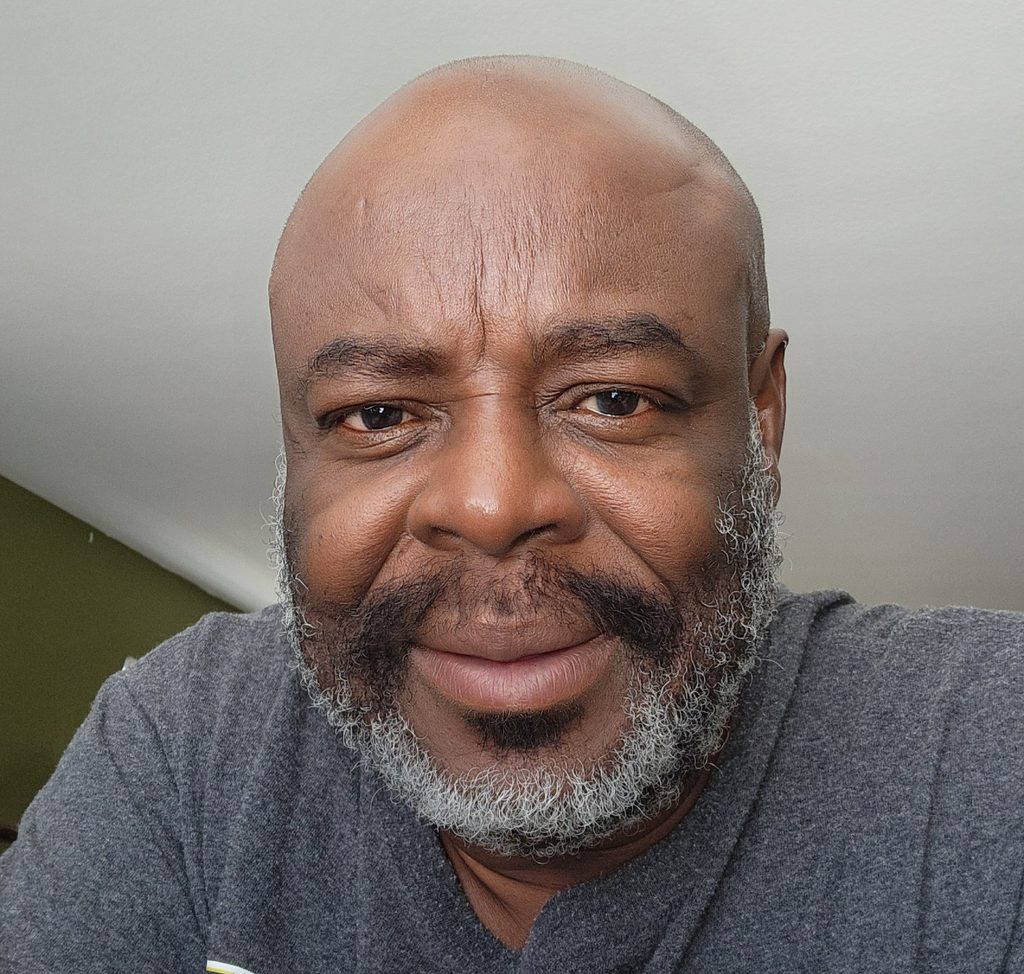
PHOTO: Kabowei Akamande
Disclaimer: Candid Reporters publishes news, information, sports, opinions, and Interviews. The site includes both reported and edited content. Unmoderated posts and Comments expressed here do not reflect the opinions of Candid Reporters or any employee thereof..
